
Introduction In industrial environments such as chemical plants, refineries, and manufacturing units, safety performance measurement is one of the most critical aspects of operational excellence. While safety policies, risk assessments, and training sessions are vital, organizations need quantifiable ways to evaluate whether these measures are working. This is where leading … [Read more...]
Energy Saving Opportunities in the Chemical Industry: Strategies & Best Practices
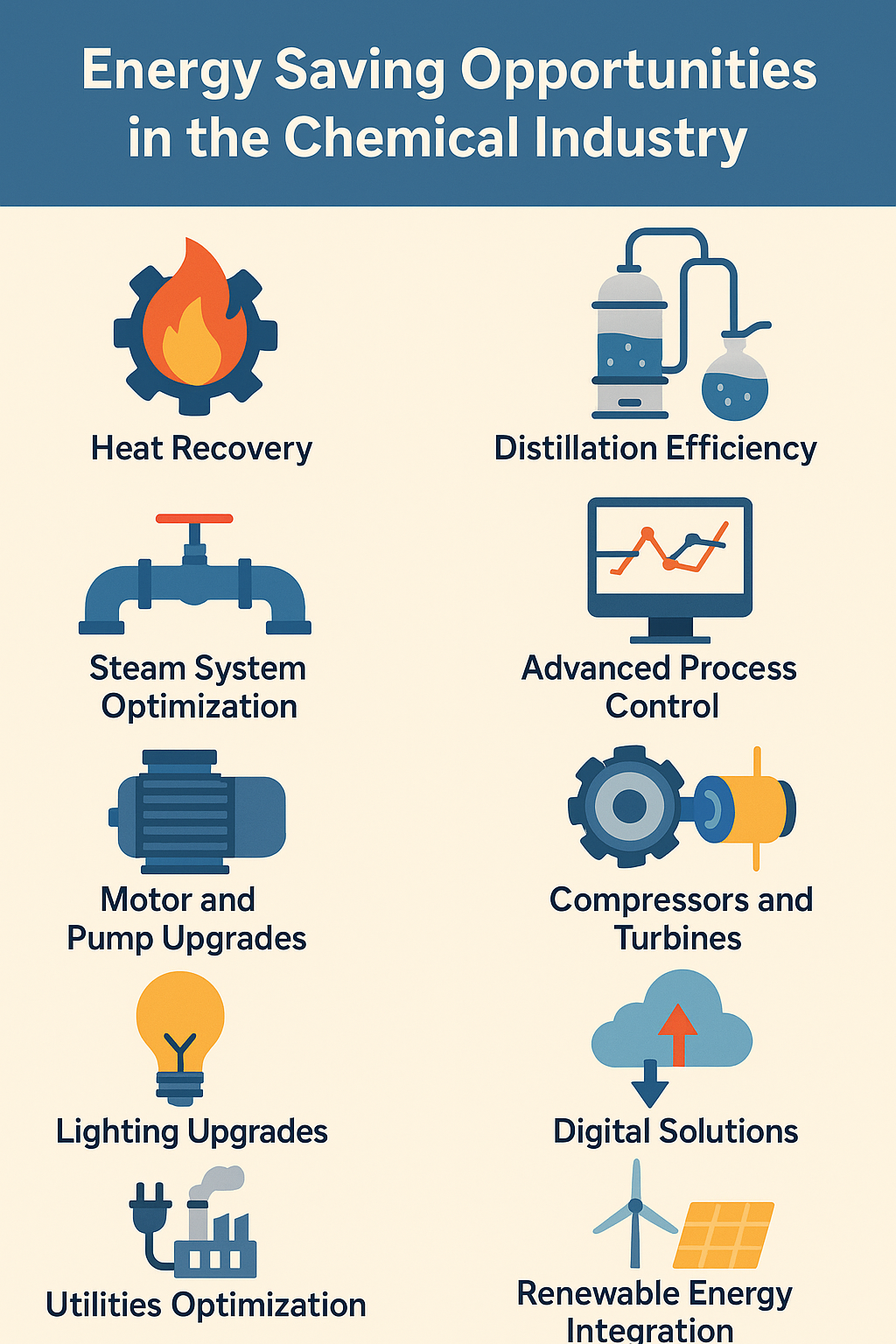
Introduction The chemical industry is one of the largest energy-consuming sectors globally. From ammonia production to refining and polymer manufacturing, energy in the form of electricity, steam, fuel, and cooling is integral to operations. With rising energy costs, stricter environmental regulations, and the global push toward net zero emissions, improving energy … [Read more...]
Process Control and Instrumentation: Essentials for Chemical Engineers

Introduction In modern chemical plants, where safety, efficiency, and reliability are paramount, process control and instrumentation serve as the nervous system. From regulating reactor temperatures to ensuring distillation columns achieve the desired purity, these tools allow engineers to monitor and manipulate processes to achieve desired outcomes. This article provides … [Read more...]
Boiler Walkdown Check: A Comprehensive Guide for Chemical and Process Engineers
Introduction Boilers are the workhorses of industrial plants, providing steam and hot water for power generation, heating, and numerous process applications. In chemical and process industries, they are critical for operations such as distillation, evaporation, drying, and sterilization. Because boilers operate under high pressure and temperature, they pose significant risks … [Read more...]
Hierarchy of Controls in Process Safety: From Elimination to PPE
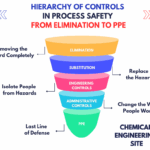
Introduction In the field of process safety, preventing incidents in high-risk industries like oil & gas, chemical manufacturing, and pharmaceuticals requires more than just compliance checklists. It demands a structured approach to identify, evaluate, and control hazards at their source. This is where the Hierarchy of Controls becomes a cornerstone in risk management … [Read more...]
Safety Risks and Mitigation Strategies in Large-Scale Chemical Production Plants

Introduction Large-scale chemical production plants are complex and high-risk environments where safety is paramount. These plants handle hazardous chemicals, operate under extreme conditions (temperature, pressure), and involve intricate processes. A single failure can lead to catastrophic consequences such as explosions, toxic releases, or environmental contamination. … [Read more...]
Chemical Engineering is Becoming Obsolete. Here’s Why I’m Wrong.
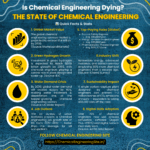
The Misconception: A Dying Profession In recent years, conversations around the future of work have been dominated by terms like automation, AI, machine learning, and digital transformation. As industries evolve, some have questioned whether traditional disciplines such as chemical engineering are becoming irrelevant.The assumption is that new-age technologies will replace … [Read more...]
Instrument Air System in Chemical Plant

An instrument air system is a critical part of any Chemical Plant. It provides compressed air to a variety of instruments and equipment, including control valves, safety systems, and process monitors. The instrument air must be clean and dry to ensure the accuracy and reliability of these instruments. An instrument air system typically consists of the following … [Read more...]
Layers of Protection Analysis (LOPA)
Layers of Protection Analysis (LOPA) is a risk assessment method that is used to evaluate the likelihood and severity of hazardous events. It is a semi-quantitative method, meaning that it uses both qualitative and quantitative factors to assess risk. LOPA is a popular risk assessment method in the process industries, such as the chemical, oil and gas, and power generation … [Read more...]
Bow Tie Analysis
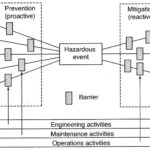
Bow tie analysis is a risk assessment technique that uses a graphical representation to identify and assess the risks associated with a particular activity or process. Origin of Bowtie Analysis The origin of Bowtie analysis is unclear, but it is believed to have originated in the 1970s. The first known use of the bowtie diagram was in a lecture on hazard analysis given … [Read more...]