Introduction
Large-scale chemical production plants are complex and high-risk environments where safety is paramount. These plants handle hazardous chemicals, operate under extreme conditions (temperature, pressure), and involve intricate processes. A single failure can lead to catastrophic consequences such as explosions, toxic releases, or environmental contamination. Therefore, understanding safety risks and implementing robust mitigation strategies is not just a compliance requirement but a moral and business imperative.
This article explores the major safety risks associated with large-scale chemical production and outlines comprehensive mitigation strategies to ensure safer plant operations.

1. Process Safety Hazards
A. Risk: Equipment Failure
- Cause: Fatigue, corrosion, manufacturing defects, or improper maintenance.
- Impact: Leakage of toxic or flammable materials, leading to fires or explosions.
Mitigation Strategies:
- Implement preventive maintenance programs.
- Use non-destructive testing (NDT) methods (ultrasonic, radiographic).
- Maintain asset integrity records and conduct periodic inspections.
- Apply API, ASME, and IEC standards for design and operations.
B. Risk: Human Error
- Cause: Lack of training, poor communication, fatigue, or procedural lapses.
- Impact: Incorrect handling of chemicals or emergency response failure.
Mitigation Strategies:
- Introduce Human Factors Engineering (HFE) in design.
- Provide role-specific training and simulation-based drills.
- Implement permit-to-work systems, checklists, and SOPs.
- Rotate shifts to avoid operator fatigue.
C. Risk: Runaway Reactions
- Cause: Exothermic reactions not adequately controlled.
- Impact: Thermal explosions, release of pressure, toxic gases.
Mitigation Strategies:
- Employ real-time monitoring systems for pressure and temperature.
- Use reactor pressure relief valves and emergency venting.
- Conduct HAZOP (Hazard and Operability) and LOPA (Layer of Protection Analysis) during design.
- Automate control systems with interlocks and alarms.
2. Chemical and Fire Hazards
A. Risk: Toxic Gas Release
- Cause: Valve leaks, ruptured pipes, or improper storage.
- Impact: Harm to workers, neighboring communities, legal penalties.
Mitigation Strategies:
- Install gas detectors (H2S, NH3, Cl2, VOCs).
- Use double-walled piping, secondary containment, and scrubbers.
- Train employees in emergency evacuation and PPE protocols.
- Prepare community alert systems and buffer zones.
B. Risk: Fire and Explosion
- Cause: Flammable gas leaks, ignition sources, static discharge.
- Impact: Loss of life, property damage, long shutdowns.
Mitigation Strategies:
- Ensure intrinsically safe equipment in hazardous zones (ATEX certified).
- Install automatic sprinkler systems, foam systems, and fire detectors.
- Conduct DSEAR/ATEX assessments.
- Use inerting and blanketing in storage tanks.
3. Environmental and Health Hazards
A. Risk: Effluent and Emissions
- Cause: Inadequate treatment of wastewater, air emissions.
- Impact: Regulatory violations, environmental damage, reputational loss.
Mitigation Strategies:
- Install Effluent Treatment Plants (ETP) and Scrubbers.
- Monitor emissions with CEMS (Continuous Emission Monitoring Systems).
- Comply with local pollution control board (PCB) standards.
- Perform periodic environmental audits.
B. Risk: Noise and Heat Exposure
- Cause: High-speed rotating equipment, heat exchangers, furnaces.
- Impact: Hearing loss, heat stress, reduced productivity.
Mitigation Strategies:
- Provide PPE: earplugs, noise-canceling headsets, heat-resistant suits.
- Rotate staff to reduce exposure time.
- Install sound barriers, insulation, and cooling systems.
- Conduct audiometric and health monitoring programs.
4. Organizational and Systemic Risks
A. Risk: Safety Culture Gaps
- Cause: Complacency, poor leadership, inadequate accountability.
- Impact: Underreporting of incidents, procedural bypassing.
Mitigation Strategies:
- Promote behavior-based safety programs.
- Encourage near-miss reporting and safety observations.
- Leadership to conduct visible felt leadership (VFL) walks.
- Set up safety committees and reward safe behavior.
B. Risk: Ineffective Emergency Response
- Cause: Outdated ERP (Emergency Response Plan), untrained staff.
- Impact: Escalation of incidents, loss of control, public outrage.
Mitigation Strategies:
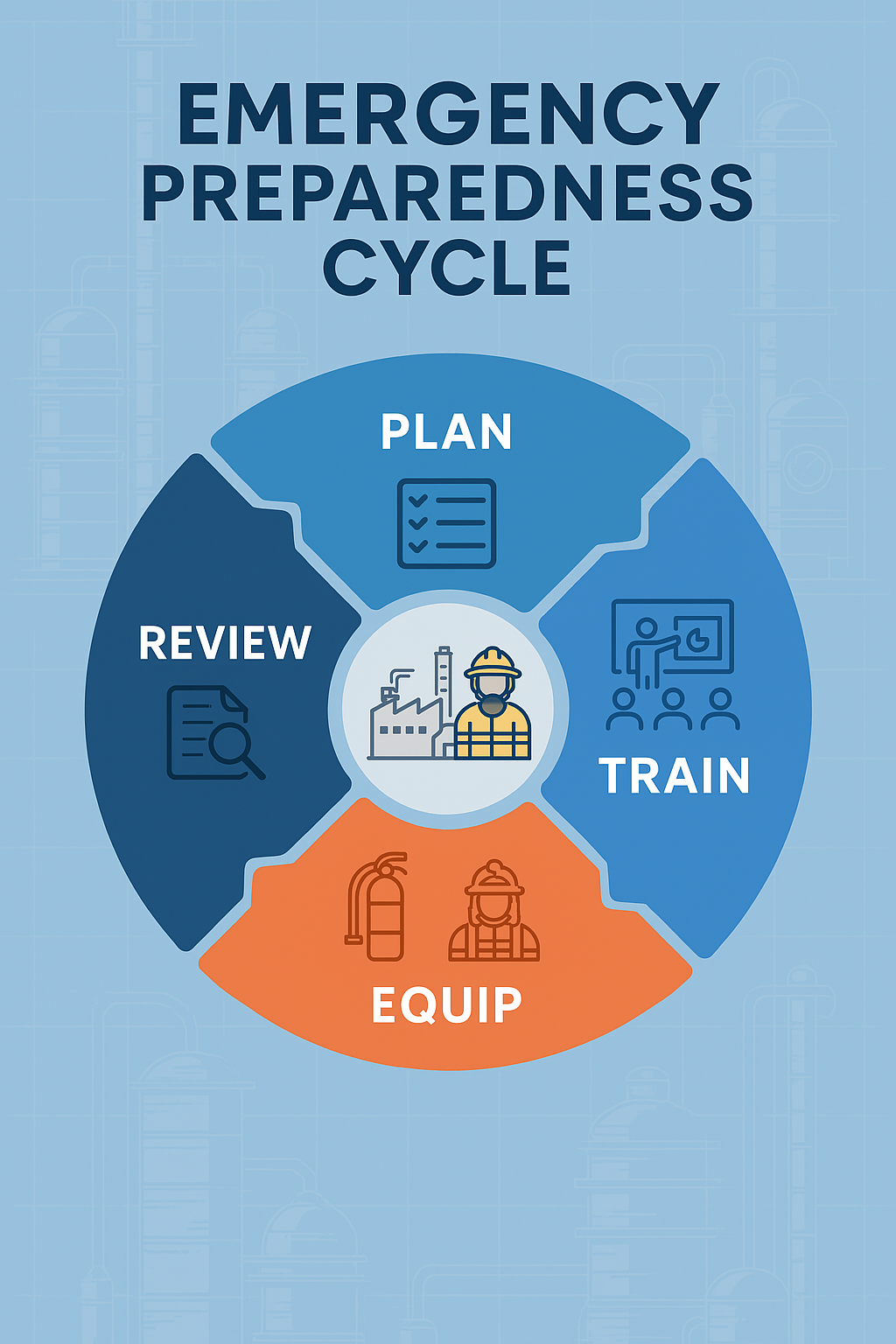
- Develop and rehearse ERP and Disaster Management Plans.
- Coordinate with local authorities and hospitals.
- Conduct mock drills and tabletop exercises quarterly.
- Maintain emergency equipment (fire suits, breathing apparatus).
5. Digital and Automation Risks
A. Risk: Control System Failures or Cybersecurity Threats
- Cause: Outdated PLC/DCS, malware, lack of access control.
- Impact: Plant shutdowns, data breaches, unsafe conditions.
Mitigation Strategies:
- Implement Industrial Cybersecurity Protocols (ISA/IEC 62443).
- Use redundant control systems (hot standby PLCs).
- Limit remote access, implement firewalls and patching.
- Conduct penetration testing and system audits.
Conclusion
Safety in large-scale chemical production isn’t a single-point solution — it’s a system of interlinked practices, people, and technologies. With evolving challenges like digitization, aging infrastructure, and regulatory pressure, plants must go beyond basic compliance to build resilient safety cultures.
By proactively identifying risks, implementing layered defenses, and embracing a mindset of continuous improvement, chemical plants can not only prevent disasters but also improve operational efficiency, stakeholder trust, and long-term profitability.
Safety is not just a cost — it’s a value creator.