Introduction
Boilers are the workhorses of industrial plants, providing steam and hot water for power generation, heating, and numerous process applications. In chemical and process industries, they are critical for operations such as distillation, evaporation, drying, and sterilization. Because boilers operate under high pressure and temperature, they pose significant risks if not maintained properly.
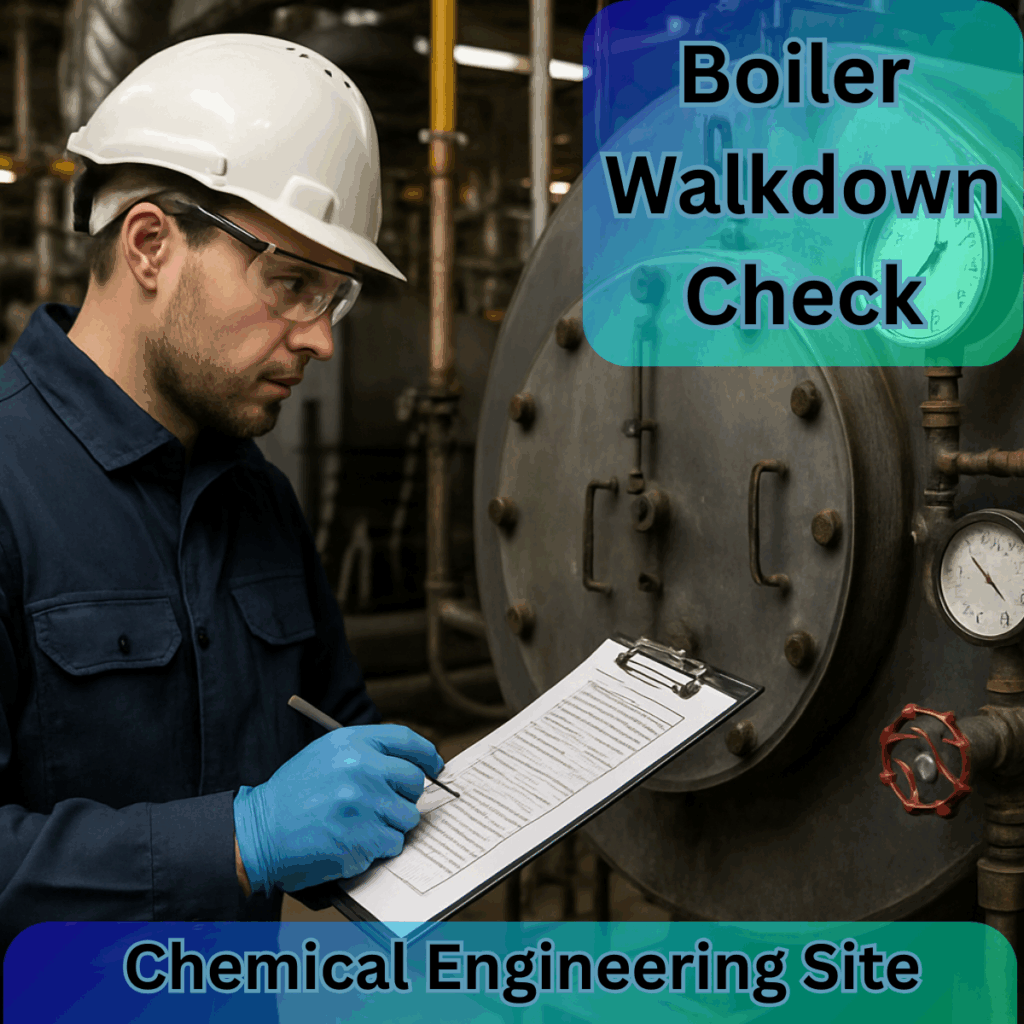
One essential practice to ensure safe and reliable boiler operation is the boiler walkdown check. A boiler walkdown is a structured inspection carried out before startup, after shutdown, or during routine plant rounds. It ensures that all systems are in proper working order, hazards are identified, and preventive measures are in place.
This article provides a comprehensive overview of boiler walkdown checks—what they are, why they matter, the detailed steps involved, checklists, common findings, and best practices for process engineers and operators.
Why Boiler Walkdown Checks are Important?
Boiler walkdowns are not just routine inspections; they are a vital part of process safety management.
Key Objectives:
- Safety: Detect leaks, cracks, and abnormal noises before they escalate.
- Reliability: Identify equipment wear and tear early, preventing unplanned shutdowns.
- Efficiency: Optimize combustion, feedwater treatment, and heat transfer.
- Compliance: Meet regulatory standards (e.g., OSHA, IBR, ASME Boiler and Pressure Vessel Code).
- Prolonged Lifespan: Early detection reduces stress on pressure parts and auxiliaries.
Types of Boiler Walkdowns
Pre-Startup Walkdown
- Conducted before firing the boiler after shutdown or maintenance.
- Ensures all valves, gauges, and safety systems are functional.
Routine Daily Walkdown
- Quick checks during shift rounds.
- Focused on identifying visible leaks, noise, vibration, and unusual readings.
Comprehensive Annual Walkdown
- Carried out during planned outages.
- Involves thorough inspection of drums, headers, tubes, refractory, and auxiliary systems.
Boiler Walkdown Checklist
A systematic approach is crucial. Below is a structured checklist for boiler walkdowns:
1. External Inspection
- Check for leaks around flanges, valves, and joints.
- Inspect insulation for damage or hotspots.
- Look for unusual vibrations or noises.
- Verify that safety signage and tags are intact.
2. Boiler Structure
- Examine boiler casing for bulges, cracks, or hot spots.
- Inspect refractory for spalling or deterioration.
- Verify proper alignment of doors, manholes, and handholes.
3. Piping and Valves
- Check feedwater, steam, and blowdown piping for leaks.
- Ensure valves are operable and not seized.
- Confirm that drain and vent valves are not leaking.
4. Pressure Parts
- Inspect boiler drums, headers, and tubes for signs of corrosion or deposits.
- Look for tube leaks, bulging, or overheating marks.
- Check weld joints for cracks.
5. Burner and Combustion System
- Inspect burners for flame stability and fuel leaks.
- Verify atomizers, igniters, and flame scanners are functional.
- Check air registers and dampers for free movement.
6. Feedwater System
- Inspect pumps for leaks, vibrations, and abnormal noise.
- Verify proper operation of deaerators and feedwater heaters.
- Check make-up water quality (pH, hardness, dissolved oxygen).
7. Controls and Instrumentation
- Calibrate pressure gauges, thermocouples, and transmitters during shutdown
- Verify safety interlocks and alarms during startup
- Ensure drum level controls are functional.
8. Safety Devices
- Inspect and test safety relief valves during startup
- Verify proper operation of low-water cutoffs during startup
- Check emergency shutdown systems during startup
9. Auxiliary Systems
- Inspect fans (FD, ID, PA) for abnormal vibration
- Check lubrication and bearing temperatures.
- Inspect electrical connections and MCC panels.
10. Housekeeping
- Ensure no combustible material is stored near the boiler.
- Verify access pathways are clear.
- Confirm fire extinguishers and hydrants are in place.
Common Issues Found During Walkdowns
- Tube leaks from corrosion or overheating.
- Soot deposits reducing heat transfer efficiency.
- Scaling in waterwalls due to poor water chemistry.
- Valve gland leaks from worn packing.
- Malfunctioning flame scanners causing nuisance trips.
- Hot spots on insulation indicating refractory damage.
Best Practices for Boiler Walkdowns
Use a Standardized Checklist
- Avoids oversight and ensures consistency.
Record Findings Digitally
- Use mobile inspection apps for real-time reporting.
Engage a Multi-Disciplinary Team
- Involve operators, maintenance, and safety engineers.
Trend Analysis
- Compare inspection results over time to detect deterioration trends.
Link with Preventive Maintenance
- Use walkdown data to plan proactive repairs.
Training and Awareness
- Train operators to recognize abnormal conditions.
Safety First
- Always wear PPE: hard hat, goggles, flame-resistant clothing, gloves, and ear protection.
Regulatory and Compliance Aspects
Boiler walkdowns also tie into compliance frameworks:
- ASME Boiler and Pressure Vessel Code (BPVC) – Design and safety requirements.
- OSHA Standards – Workplace safety compliance.
- National Fire Protection Association (NFPA) – Combustion safety.
- Local Inspectorate Approvals – Periodic certification of boilers.
Failure to comply can lead to fines, shutdowns, or catastrophic accidents.
Real-World Case Studies
Case 1: Tube Leak in a Power Plant Boiler
- Finding: Walkdown revealed water seepage at a tube bend.
- Action: Shutdown and replacement of faulty section.
- Outcome: Prevented catastrophic failure and costly downtime.
Case 2: Flame Scanner Malfunction in Refinery Boiler
- Finding: Nuisance trips during startup.
- Action: Calibration and replacement of sensor.
- Outcome: Improved reliability and avoided production losses.
Case 3: Scaling in a Chemical Plant Boiler
- Finding: Reduced heat transfer efficiency observed during annual walkdown.
- Action: Chemical cleaning and improved feedwater treatment.
- Outcome: Restored efficiency, saving significant fuel costs.
Role of Digital Tools in Walkdowns
Modern plants are integrating digital technologies:
- IoT sensors for real-time monitoring of temperature, pressure, and vibration.
- Digital twin models for predictive maintenance.
- Mobile inspection apps with QR code scanning.
- AI-powered analytics to predict tube failures and optimize cleaning schedules.
Conclusion
Boiler walkdown checks are an indispensable part of plant safety, reliability, and efficiency. They help identify hidden issues, prevent accidents, and ensure compliance with regulatory standards. By using structured checklists, digital tools, and best practices, engineers can turn routine inspections into powerful preventive maintenance strategies.
In an industry where boiler failures can mean millions in losses—or worse, human lives—regular walkdowns are not optional; they are essential.
Final Note: For chemical engineers, mastering boiler walkdowns is not just about technical checks. It’s about cultivating a safety-first mindset, ensuring operational excellence, and protecting both people and assets.