Chemical engineering is a multifaceted discipline that blends chemistry, physics, biology, mathematics, and economics to design, optimize, and manage chemical processes for producing materials and chemicals at large scale. Although it seems fundamental today, chemical engineering as a distinct profession and academic discipline is relatively young—developing mainly in the late 19th and early 20th centuries. Its growth parallels the Industrial Revolution, when the increasing demand for products such as fertilizers, fuels, and bulk chemicals necessitated innovation beyond traditional batch production methods.
This article explores the pivotal historical milestones that shaped chemical engineering, highlighting influential figures whose insights and innovations revolutionized the industry.
Origins of Chemical Engineering: From Industrial Chemistry to a Discipline
Early Industrial Chemistry and Batch Processing
Before the 19th century Industrial Revolution, chemical manufacturing primarily relied on batch processes. In batch processing, chemical components were manually mixed in discrete amounts, processed for set durations, then isolated and purified. While this technique sufficed for small-scale, artisan chemical production like soaps, perfumes, and dyes, it was inefficient and labor-intensive for growing industrial demands.
The Industrial Revolution introduced a massive increase in demand and scale for industrial chemicals, such as soda ash and sulfuric acid, whose production volume and quality requirements outgrew what batch processes could fulfill. This demand triggered the exploration of continuous manufacturing processes, resembling an assembly line, enabling consistent production of large quantities at lower cost.
Recognition of Chemical Engineering as a Unique Profession
Chemical engineering originated from the specialization of industrial chemistry and process design, marrying chemical sciences with engineering principles to create efficient, scalable industrial production methods. The first formal recognition of chemical engineering as a profession emerged in the United Kingdom in the late 19th century.
In 1878, George E. Davis, an English chemical inspector and consultant, conducted extensive visits to chemical plants. Through his observations, he identified common fundamental steps underlying diverse chemical processes and synthesized them into the concept of “unit operations”—basic building blocks such as distillation, crystallization, and filtration that occur in most chemical manufacturing. This insight allowed chemical manufacturers to transition from product-focused processes to studying and optimizing process steps categorically.
Davis became the first to use the term “chemical engineering” and is widely regarded as the Father of Chemical Engineering. In 1887, he delivered a famous series of lectures on chemical engineering at Manchester Technical College, effectively establishing the discipline academically and professionally. Later, his ideas influenced the publication of the Handbook of Chemical Engineering (1901), which provided foundational principles for assessing chemical processes systematically.
Landmark Milestones in Chemical Engineering Development
Unit Operations: The Cornerstone Concept
Following Davis’s introduction of unit operations, Arthur Dehon Little, an American chemical engineer and entrepreneur, expanded this concept in the early 20th century. He emphasized analyzing chemical processes based on the operations performed rather than the products alone. This process-oriented perspective made unit operations the conceptual and practical core of chemical engineering education and practice.
This understanding allowed chemical engineers to design and optimize complex plants by modularizing them into discrete unit operations, simplifying scale-up and troubleshooting.
Development of Chemical Engineering Education
The first chemical engineering degree program was established in 1888 by Lewis M. Norton at the Massachusetts Institute of Technology (MIT), USA. Norton’s curriculum pioneered a four-year course specifically tailored for chemical engineering, integrating chemistry with engineering sciences like heat transfer, fluid mechanics, and process design. This academic institutionalization was fundamental to advancing chemical engineering research and industrial innovation.
Later, Warren K. Lewis, also at MIT, refined chemical engineering as a formal discipline and academic curriculum. He co-developed innovative catalytic processes, especially catalytic cracking for petroleum refining, and contributed significantly to chemical reactor theory.
Professional Organizations Formation
To solidify chemical engineering as a recognized profession and foster collaboration, specialized institutions were established:
- The Society of Chemical Industry was founded in 1881 in the UK, initially representing chemists but later influential in chemical engineering.
- The American Institute of Chemical Engineers (AIChE) was founded in 1908, marking growing recognition in the US.
- The Institution of Chemical Engineers (IChemE) was established in London in 1922, continuing to serve as a leading international professional body.
Significant Technological and Scientific Advances
Transport Phenomena and Reaction Engineering
In the 1940s and 1950s, chemical engineering evolved beyond unit operations to include rigorous mathematical descriptions of the transport of momentum, heat, and mass. This framework, called transport phenomena, was pioneered by researchers such as R. Byron Bird and Warren Stewart. It allowed a detailed understanding of how fluids flow, how heat transfers in reactors and heat exchangers, and how mass moves in separation processes.
Simultaneously, chemical reaction engineering emerged as a discipline focused on understanding reaction rates, reactor design, kinetics, and catalyst development, shifting from previous “unit processes” classifications. This allowed engineers to design more efficient reactors tailored for complex chemical syntheses.
The Haber-Bosch Process: Transforming Agriculture
One key technological milestone was the industrial synthesis of ammonia via the Haber-Bosch process, developed by Fritz Haber and Carl Bosch in the early 20th century. Ammonia production from nitrogen and hydrogen under high pressure and temperature revolutionized fertilizer availability worldwide, enabling vast increases in food production to support global population growth.
Haber won the Nobel Prize in Chemistry in 1918, and Bosch scaled the technology industrially, inventing new high-pressure chemical reactors. Their work exemplified chemical engineering’s ability to create large-scale processes with profound societal impact.
Expansion into Biotechnology and Polymers
Post-World War II, chemical engineering extended beyond petrochemicals to biological processes. Engineers adapted their skills for pharmaceutical production, notably scaling penicillin fermentation during the war, which laid the foundations for modern biochemical engineering.
Simultaneously, polymer science flourished, with chemical engineers developing reactors and processes for producing plastics and synthetic fibers shaping the modern materials economy.
Safety, Environmental Stewardship, and Sustainability
As chemical plants grew larger and more complex, several catastrophic industrial disasters underscored the importance of safety and environmental care, reshaping chemical engineering practices:
- The Flixborough disaster (UK, 1974) and Bhopal gas tragedy (India, 1984) were devastating accidents that amplified global focus on process safety and risk management.
- Trevor Kletz, known as the “Father of Process Safety,” pioneered concepts of inherent safety—designing chemical plants to avoid hazards rather than merely mitigating them. His work revolutionized plant design and safety protocols.
- Environmental awareness pushed chemical engineering towards green chemistry and sustainable process development, integrating pollution control, waste minimization, and energy efficiency into core practice.
Contemporary Themes and Forward Trends
Today, chemical engineering integrates digitalization, sustainability, and biotechnology in new ways:
- Process Systems Engineering (PSE) utilises computer simulation, process control, and optimization for integrated plant design.
- Synthetic biology and bioprocess engineering enable production of biofuels, pharmaceuticals, and specialty chemicals from renewable resources.
- Green engineering and circular economy principles drive sustainable resource use and reduce environmental footprints.
Chemical engineers remain essential for addressing challenges like climate change, energy security, and food production.
Influential Figures in Chemical Engineering
George E. Davis (1850–1907)
Davis is recognized as the founding figure of chemical engineering who first formalized the unit operations concept and coined the term “chemical engineering.” His lectures at Manchester and his consulting work laid the groundwork for the discipline.
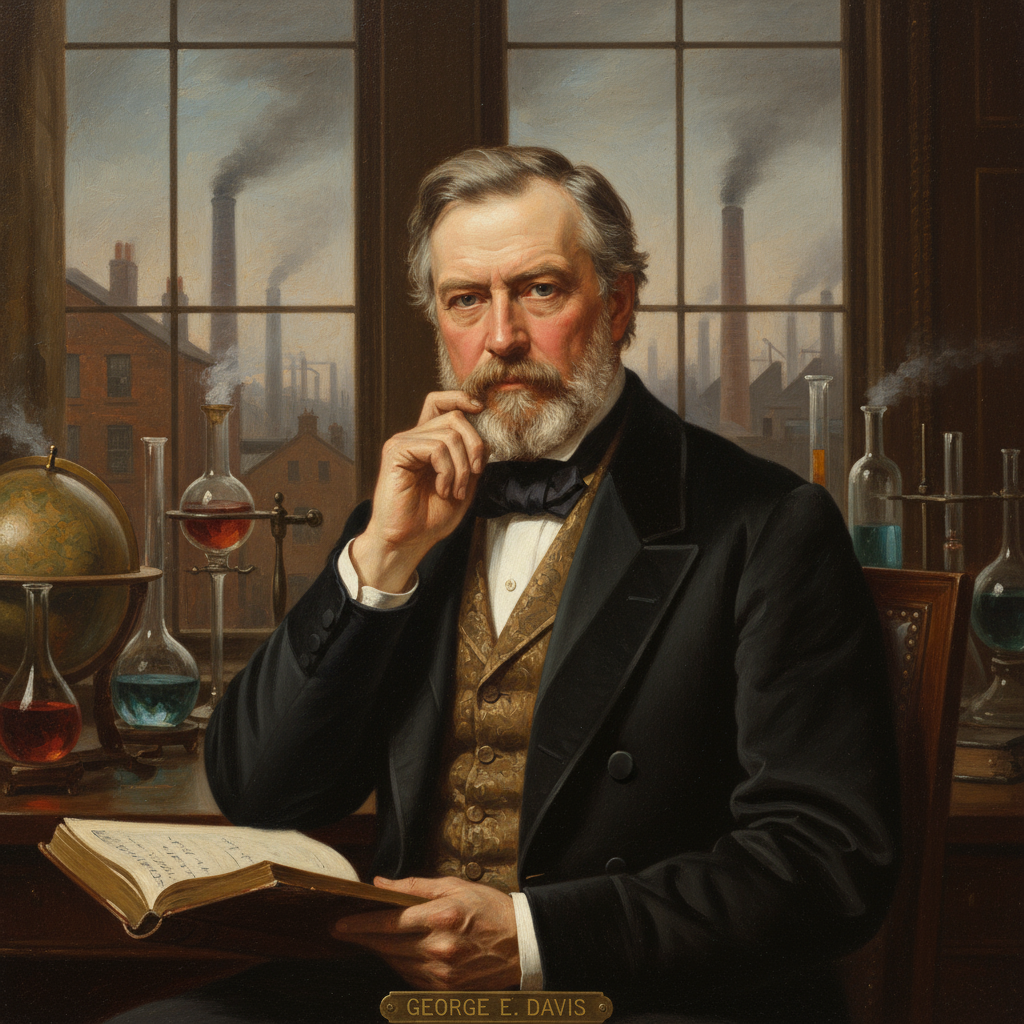
Father of Chemical Engineering
Lewis M. Norton (1865–1893)
Norton established the world’s first bachelor’s degree program dedicated to chemical engineering at MIT, contributing to the academic foundation of the profession.
Warren K. Lewis (1882–1975)
An influential academic and researcher at MIT, Lewis contributed to catalytic process design, chemical reactor development, and chemical engineering education.
Arthur Dehon Little (1863–1935)
Widely recognized for advancing unit operations and founding a chemical consulting firm, Little influenced industrial research and practice.
Fritz Haber (1868–1934)
Nobel laureate credited with the discovery of catalytic ammonia synthesis, revolutionizing fertilizer production.
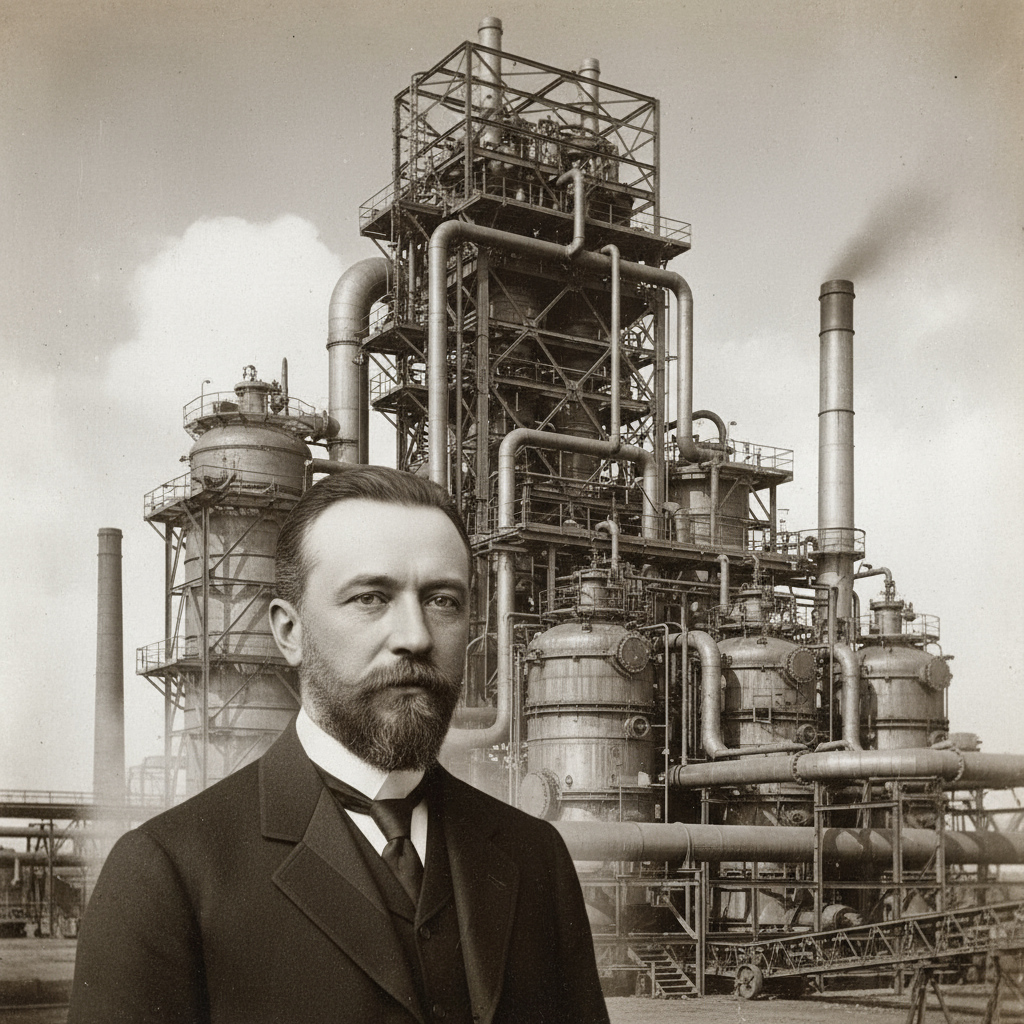
Carl Bosch (1874–1940)
Scaled the Haber process industrially and invented high-pressure chemical reactors.
Trevor Kletz (1922–2013)
Known for pioneering process safety and inherent safety principles, Kletz’s work drastically improved chemical plant safety standards.

Frances H. Arnold (1956–Present)
Nobel Prize-winning pioneer of directed enzyme evolution, transforming industrial catalysis towards sustainable bio-processes.
Margaret Hutchinson Rousseau (1910–2000)
Engineered industrial-scale penicillin fermentation during WWII, impacting pharmaceutical manufacturing.
Octave Levenspiel (1926–2017)
Developed fundamental chemical reactor engineering theory still used worldwide.
Conclusion
From artisanal batch processes to vast continuous plants producing millions of tons annually, chemical engineering has transformed the modern world. This transformation is rooted in the vision of pioneering engineers who developed fundamental concepts like unit operations, advanced process design, and safety engineering. Today’s chemical engineers build on this legacy, tackling pressing global challenges with innovation and multidisciplinary skills.
Understanding historical milestones and influential figures in chemical engineering enriches appreciation for the discipline’s evolution and highlights the enduring role it plays in science, industry, and society.