Introduction
The chemical industry is one of the largest energy-consuming sectors globally. From ammonia production to refining and polymer manufacturing, energy in the form of electricity, steam, fuel, and cooling is integral to operations. With rising energy costs, stricter environmental regulations, and the global push toward net zero emissions, improving energy efficiency has become both a strategic and environmental imperative.
This article explores key energy saving opportunities in the chemical industry, highlighting technologies, strategies, and real-world examples that can help plants cut costs, reduce emissions, and improve competitiveness.
Why Energy Efficiency Matters in the Chemical Industry?
- High Energy Intensity: Processes like steam cracking, ammonia synthesis, and chlor-alkali are energy-intensive.
- Environmental Impact: Energy use contributes significantly to greenhouse gas (GHG) emissions.
- Economic Competitiveness: Energy costs can account for 20–40% of production costs in some chemical plants.
- Regulatory Compliance: Governments enforce standards like the EU ETS, ISO 50001, and carbon taxes.
Major Energy Consumers in the Chemical Industry
- Steam Generation (boilers, fired heaters)
- Pumps and Compressors
- Distillation Columns
- Refrigeration and Cooling Systems
- Drying Operations
- Electrochemical Processes (e.g., chlor-alkali, aluminum smelting)
- Furnaces and Kilns

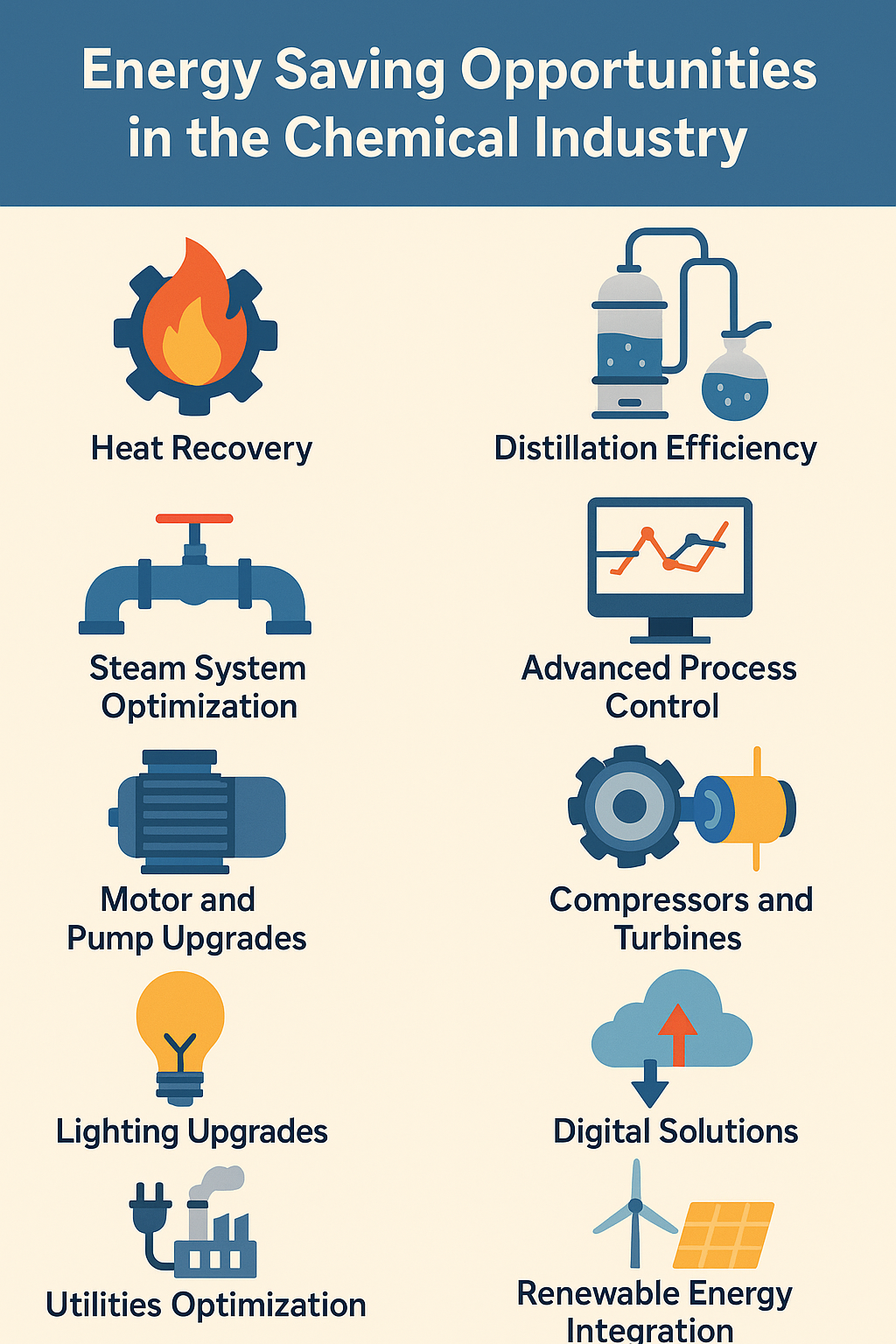
Key Energy Saving Opportunities
1. Process Integration and Heat Recovery
- Pinch Analysis: Identifies maximum heat recovery between hot and cold streams.
- Heat Exchangers: Optimize network to recover waste heat.
- Condensate Recovery: Return hot condensate to boilers, reducing steam demand.
- Case Example: A petrochemical plant reduced fuel use by 15% by optimizing its heat exchanger network.
2. Efficient Distillation Systems
- High-Performance Trays/Packings: Improve mass transfer efficiency.
- Heat Pump Assisted Distillation: Reduce reboiler duty.
- Dividing Wall Columns: Save energy by combining multiple separations.
- Alternative Separation Technologies: Membranes or adsorption in place of distillation.
- Case Example: A refinery achieved 20% steam savings by retrofitting trays in crude distillation.
3. Boiler and Steam System Optimization
- Boiler Efficiency Improvement: Install economizers, air preheaters.
- Steam Trap Maintenance: Eliminate leaks and blockages.
- Proper Insulation: Prevent heat losses in steam lines.
- Variable Pressure Operation: Adjust steam pressure to demand.
4. Pumps and Compressors
- Variable Frequency Drives (VFDs): Match motor speed to process demand.
- Impeller Trimming: Optimize pump curves to reduce throttling losses.
- Leak Detection in Compressed Air Systems: Significant energy savings possible.
- High-Efficiency Motors: Upgrade to IE3 or IE4 standard motors.
5. Refrigeration and Cooling Systems
- Cooling Tower Optimization: Use VFDs for fan motors and cooling water pumps
- Free Cooling: Utilize ambient cold conditions and chillness from process fluids like LNG when possible
- Chiller Optimization: Operate at optimal load and maintain regularly.
- Heat Recovery from Refrigeration: Use rejected heat for other plant services.
6. Drying Operations
- Low-Temperature Drying: Use waste heat for drying.
- Heat Pump Dryers: Improve efficiency over direct heating.
- Optimized Air Flow: Reduce energy consumption by proper air circulation.
7. Electrochemical Processes
- Membrane Cell Technology: Replace older diaphragm or mercury cells in chlor-alkali industry.
- Electrode Optimization: Use advanced coatings for reduced resistance.
- Process Control Improvements: Maintain optimal current efficiency.
8. Advanced Process Control (APC)
- Model Predictive Control (MPC): Minimizes energy use while maintaining product quality.
- Real-Time Optimization (RTO): Continuously optimizes setpoints to reduce energy waste.
- Case Example: An ethylene cracker reduced fuel consumption by 5% using APC.
9. Utility System Optimization
- Energy Management Systems (EMS): Integrate utilities like power, steam, cooling for efficiency.
- Cogeneration (CHP): Simultaneous production of electricity and heat from the same fuel.
- Renewable Integration: Solar thermal or biomass for steam generation.
10. Waste Heat Recovery and Reuse
- Organic Rankine Cycle (ORC): Generate electricity from low-grade heat.
- Thermal Storage Systems: Store excess heat for later use.
- Flue Gas Heat Recovery: Preheat combustion air or boiler feedwater.
Role of Digitalization in Energy Saving
- Digital Twins: Simulate plant operation and identify inefficiencies.
- IoT Sensors: Monitor real-time energy consumption.
- Predictive Maintenance: Reduce downtime and energy losses.
- AI & Machine Learning: Optimize complex process variables for minimal energy use.
Energy Management Standards
- ISO 50001: Framework for systematic energy management.
- ASME Energy Assessment Standards: Guidelines for evaluating steam, process heating, and pumping systems.
- National Energy Efficiency Regulations: Compliance-driven improvements.
Case Studies
Case 1: Ammonia Plant
- Problem: High natural gas consumption.
- Solution: Installed waste heat recovery boiler in reformer.
- Result: 10% reduction in fuel use.
Case 2: Chlor-Alkali Plant
- Problem: Outdated diaphragm cells.
- Solution: Switched to membrane technology.
- Result: 25% energy savings.
Case 3: Polymer Production
- Problem: Excessive compressor energy use.
- Solution: Installed VFDs and optimized compressor sequencing.
- Result: 15% reduction in electricity use.
Barriers to Energy Efficiency
- High Capital Costs: Some technologies require significant investment.
- Operational Resistance: Changes in procedures may face pushback.
- Knowledge Gaps: Lack of awareness of best practices.
- Maintenance Challenges: Poor upkeep reduces savings potential.
Best Practices for Energy Efficiency Programs
- Conduct Energy Audits regularly.
- Establish KPIs for energy performance.
- Involve employees through awareness programs.
- Implement continuous monitoring systems.
- Integrate energy savings into sustainability goals.
Future Trends
- Electrification of Processes: Using renewable electricity instead of fossil fuels.
- Hydrogen Economy: Integration of green hydrogen as feedstock and energy source.
- Carbon Capture Utilization and Storage (CCUS): Reducing emissions from energy use.
- Circular Economy: Reusing waste heat, materials, and by-products.
Conclusion
Energy efficiency in the chemical industry is not just a cost-saving measure—it is a driver of sustainability, competitiveness, and innovation. From optimizing distillation columns to embracing digitalization, opportunities exist across every unit of operation. By systematically implementing energy saving measures, chemical plants can achieve substantial reductions in operating costs and emissions.
Final Thought: In the journey toward a low-carbon future, chemical engineers play a vital role in uncovering and implementing energy-saving opportunities. Every kilowatt saved is a step closer to sustainability.